

A Step-By-Step Guide to Salmon en Papilotte
Cooking food wrapped in something is about as old as cooking itself. People were steaming fish in leaves, clay, and bark long before anyone owned an oven. The French version, en papillote, is just the dressed-up cousin of that idea. Papillote originally meant a twist or wrapper of paper. It’s the same word for the little paper frills you see on the bones of a fancy lamb chop. (I had always assumed those were purely decorative. They were originally a handle so nobody had to pick up a greasy bone.) By the 18th and 19th centuries, French cooks were baking cutlets and fish in oiled paper parcels with herbs, mushrooms, and a bit of wine. Exactly who first did it is murky, as with most culinary “firsts.” The French weren’t shy about taking credit, though.
The best-known story is an American one, pictured fancifully in the featured image above. Around 1901, Jules Alciatore of Antoine’s restaurant in New Orleans was said to have created pompano en papillote to honor Alberto Santos-Dumont (no relation), the Brazilian aviation pioneer who was visiting the city. The paper bag, sealed and baked until it puffed up, looked like one of his balloons. It still turns up on the menu there, and it’s served with a bit of theater. The diner’s bag gets cut open at the table, releasing a cloud of steam. (A tidy story, and I’m happy to repeat it, but I’d file it under “as the legend goes.”)
The method works because the parcel traps moisture. The fish, along with whatever you’ve tucked in with it, steams in its own juices. Nothing dries out, flavors stay concentrated, and cleanup is close to nonexistent. Those are the three qualities I look for in a dinner. As a bonus, since it is steamed and can be cooked without any oils, it is also a very healthy meal.
The variations are nearly endless. Parchment paper is the classic wrapper, but foil is more forgiving and can go on a grill. Other cultures have been doing their own versions for centuries, wrapping fish in banana leaves in Southeast Asia and Mexico, lotus leaves in China, and corn husks or taro leaves elsewhere. The Italians have al cartoccio, which is the same idea. The seasonings change the whole personality of the dish: lemon, dill, and butter for something classic, white wine, tomatoes, and olives for something Provençal, or ginger, soy, and scallions for an Asian twist. Thinly sliced vegetables usually go underneath the fish as a bed (I have put stalks of asparagus under filets, and they come out perfect). Whatever vegetables or extras you add steam in the juices and become a side dish with no extra effort. And it isn’t just for fish. Chicken, shrimp, vegetables, and even fruit desserts get the papillote treatment. In fact, I think I’ll try shrimp next, with some red and green peppers and onions – and maybe more of that asparagus!
Salmon en Papillote
Here’s an example of this method, using last night’s dinner as a step-by-step example.
I start by pre-heating the oven to 350. You can bake at 400 for a shorter time, but I find the lower temp guarantees the fish does not over-cook or dry out. While it is warming up, lay out the parchment paper (one for each diner), about a foot-and-a-half long sheet. By the way, if you’ve never used parchment paper, I suggest you pick some up. It is much cheaper, and IMHO more versatile than foil.
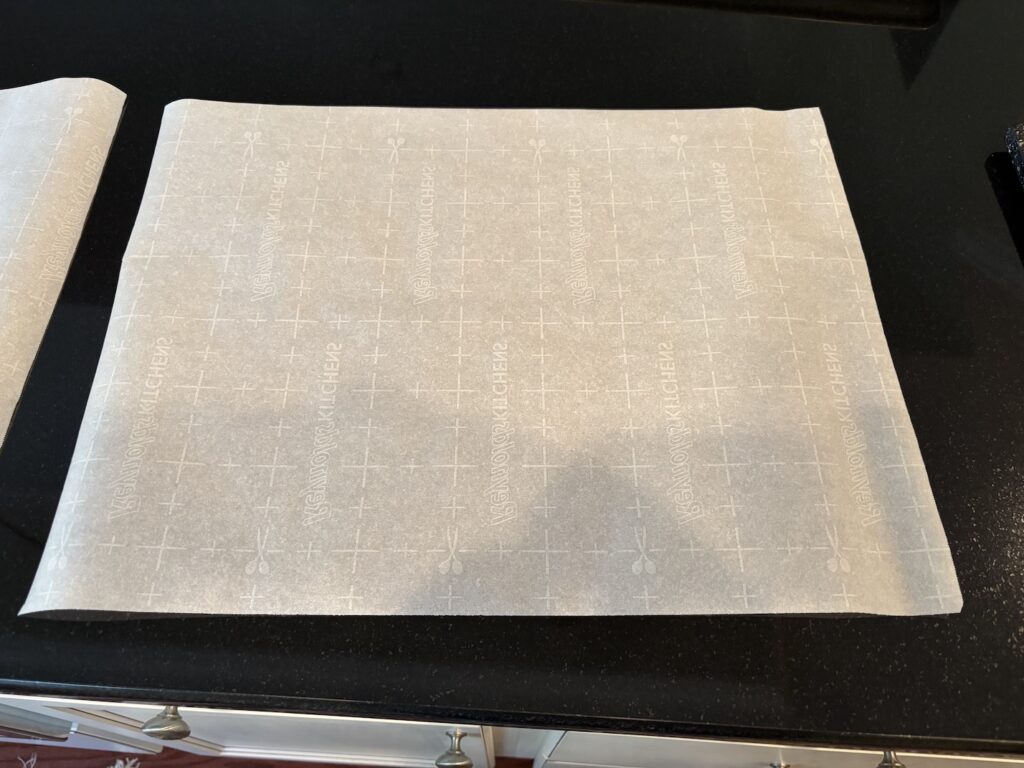
Next, season your filets however you like, and center them on the sheets. For this meal I used Montreal Chicken spice.
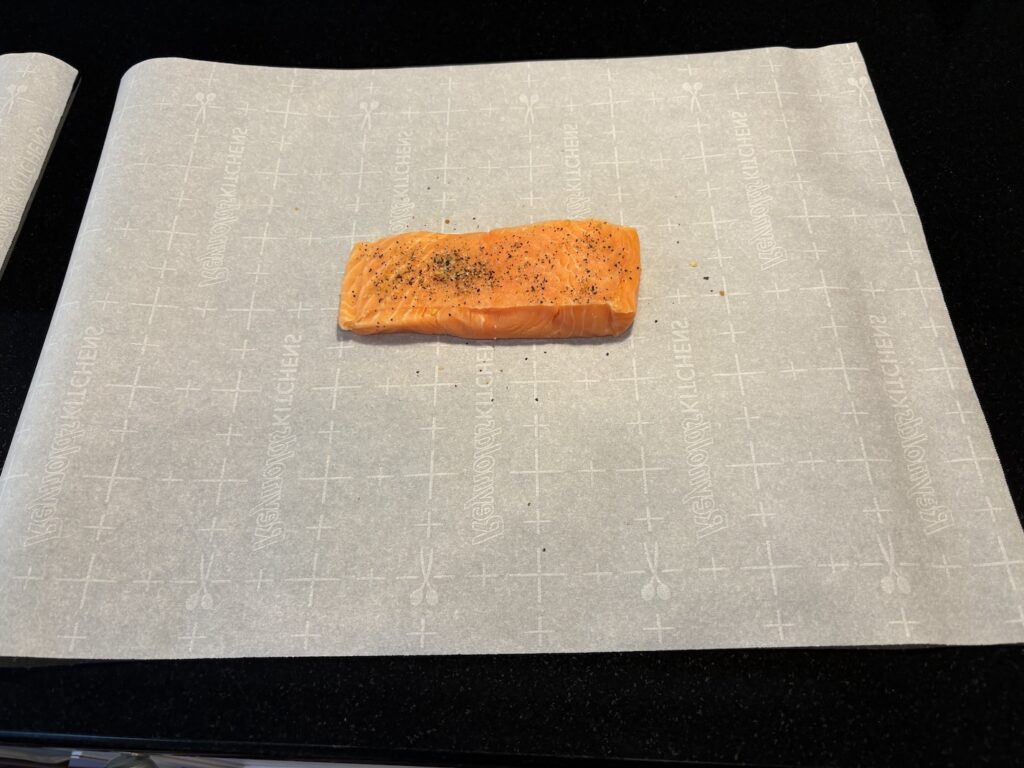
If you like, you can lay the filet on top of some of your vegetables. As I mentioned, I’ve done this with asparagus. In this case, I surrounded and topped the filets with zucchini, squash, and broccoli. I also sprinkled over the veggies a bit of celery salt and pepper.
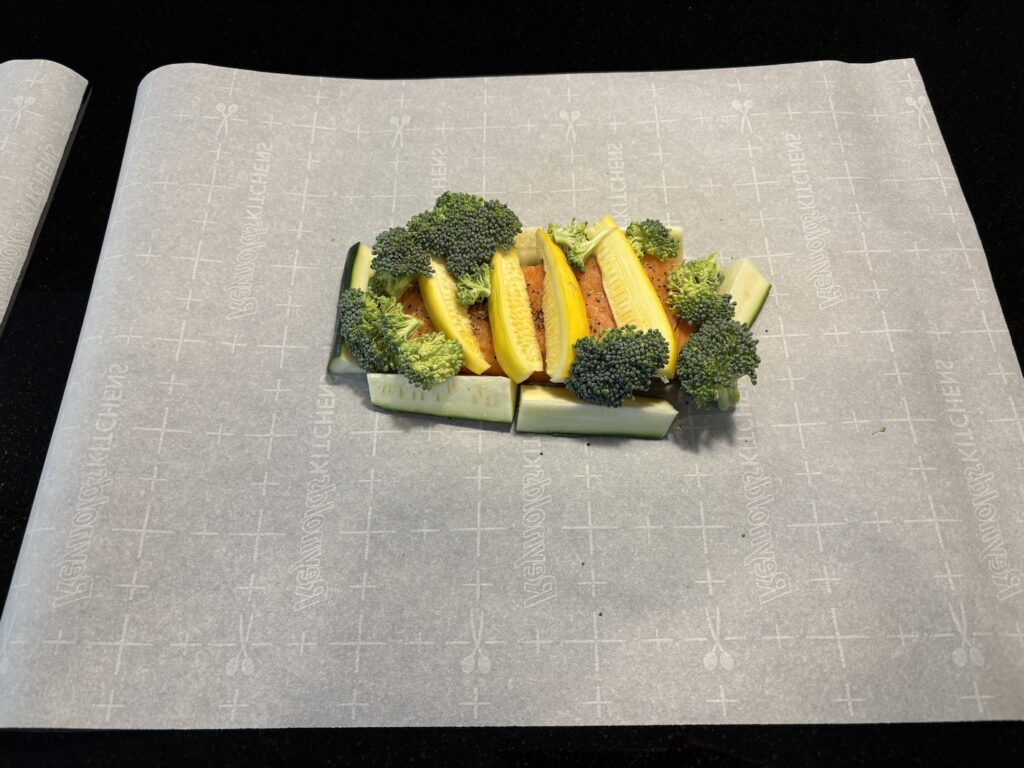
Use your imagination – peppers, onions, cherry tomatoes sliced in half, carrot slices – just about anything can be added.
Now – you don’t really need to add any liquid at all. Sometimes I might sprinkle just a little wine or lemon juice for flavor. In this case, three slices of lemon on top adds just a little kick.
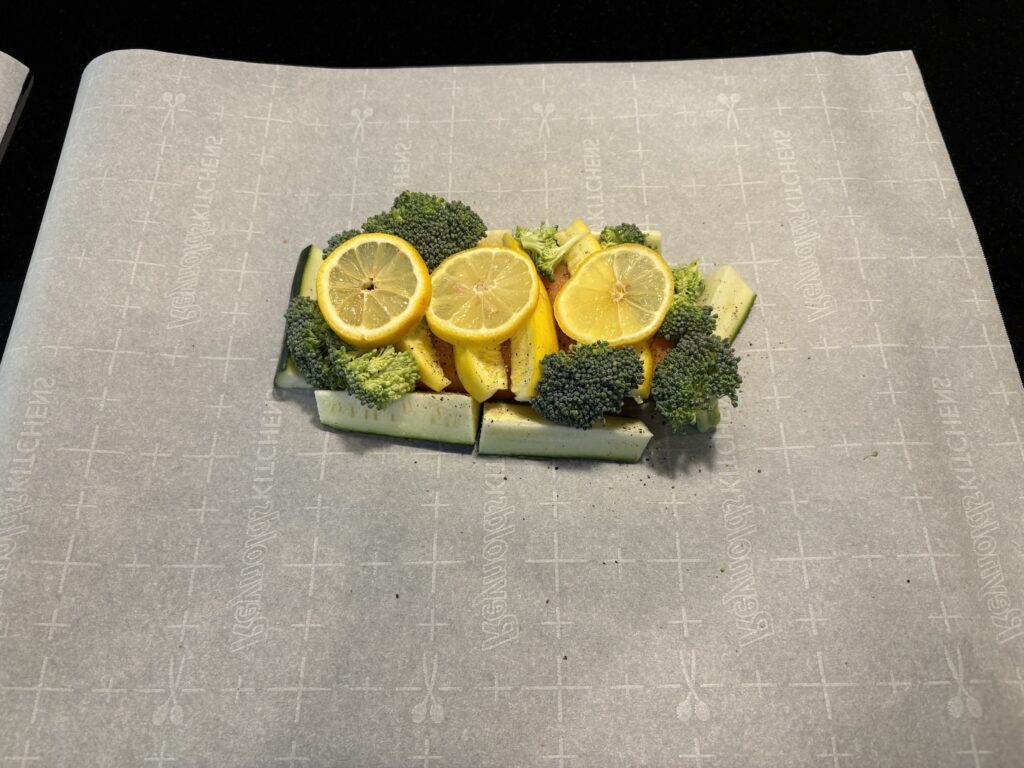
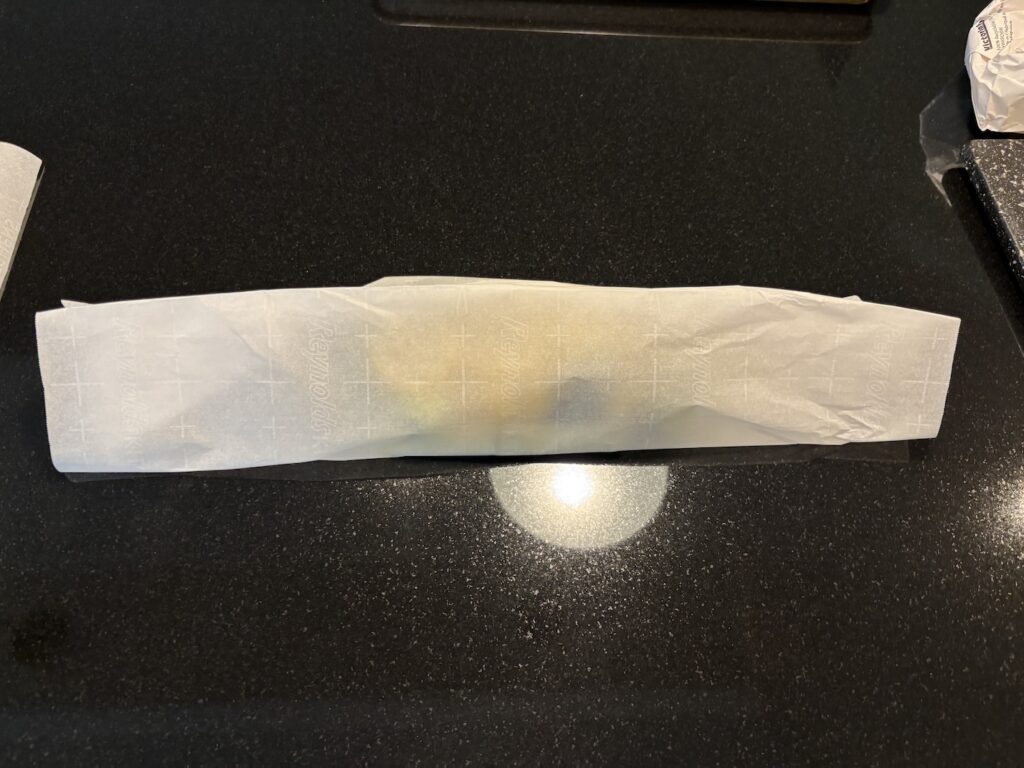
Time to wrap things up Literally. First, bring the two long edges together, and fold them down a few times to get a good seal.
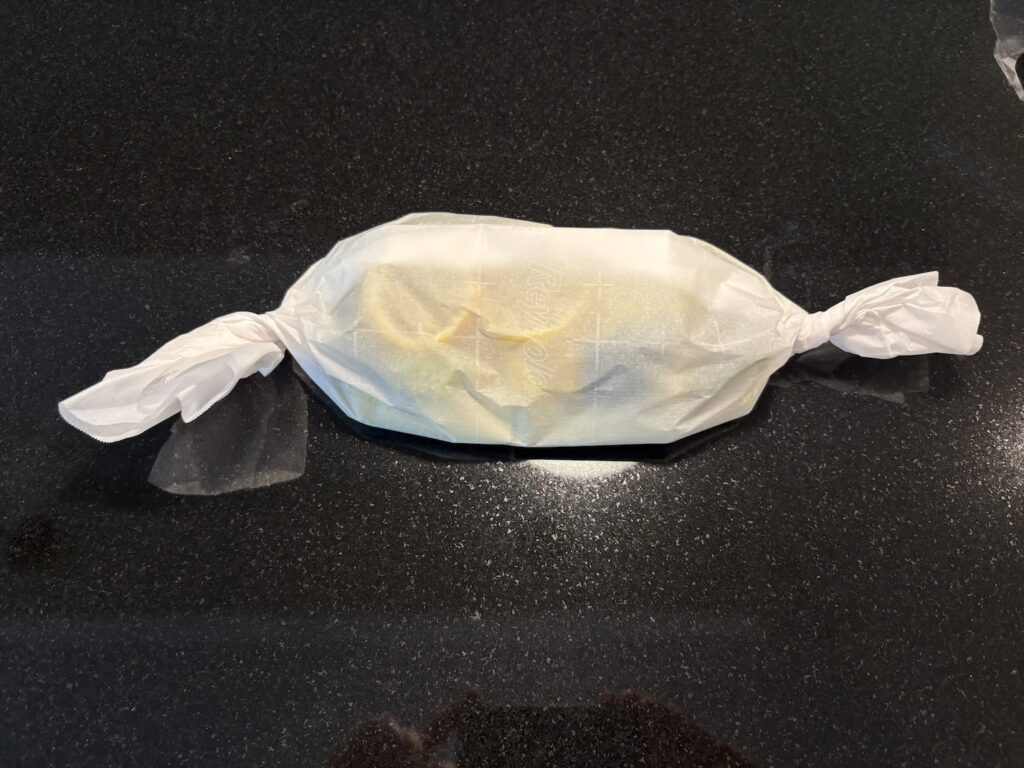
Next, twist each end so it looks like a giant piece of candy.
Place your en papillotes on a baking sheet, and you are ready to pop it in the oven.
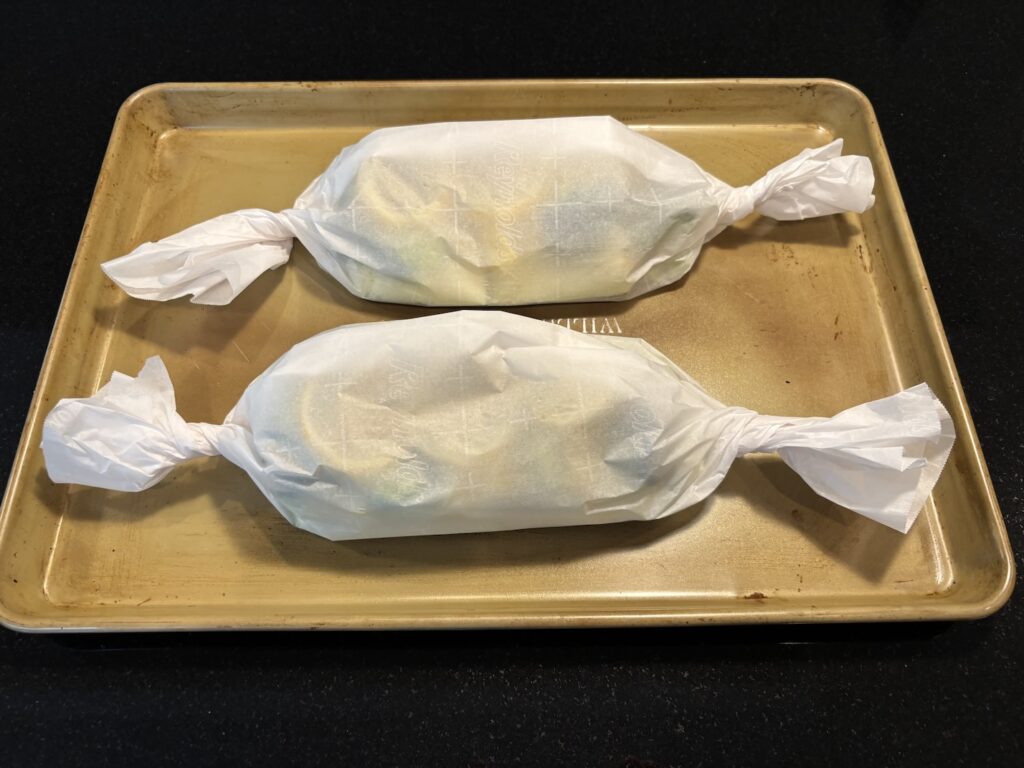
At 350, you want to bake for 35 minutes. If the fish filets are cut more than an inch thick, I add about an extra five minutes. If you are baking at 400, 12-15 minutes should do it. If you’re concerned, a temperature probe of the inside of the filet should be 135 or higher, and the fish should flake easily. I’ve done this dozens of times, and the fish has always been perfectly cooked.
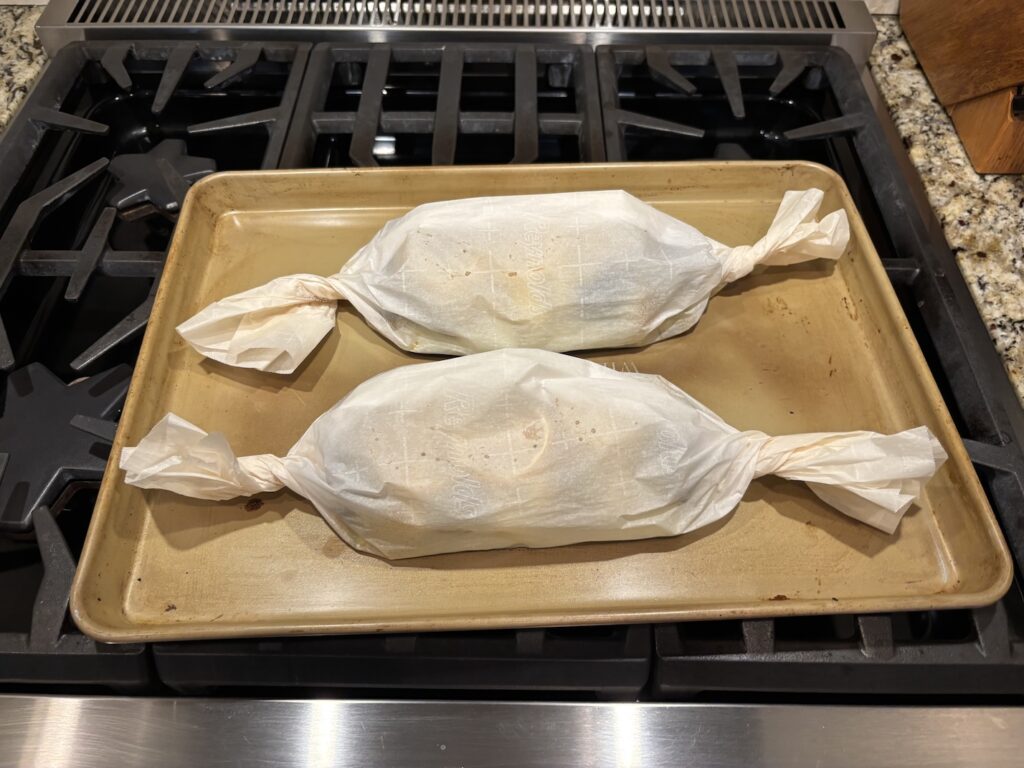
As you can see in the picture above, fresh out of the oven there has been no leakage and both papillotes are still sealed. This really is an easy clean-up meal.
Here is what it looks like when the paper is opened.
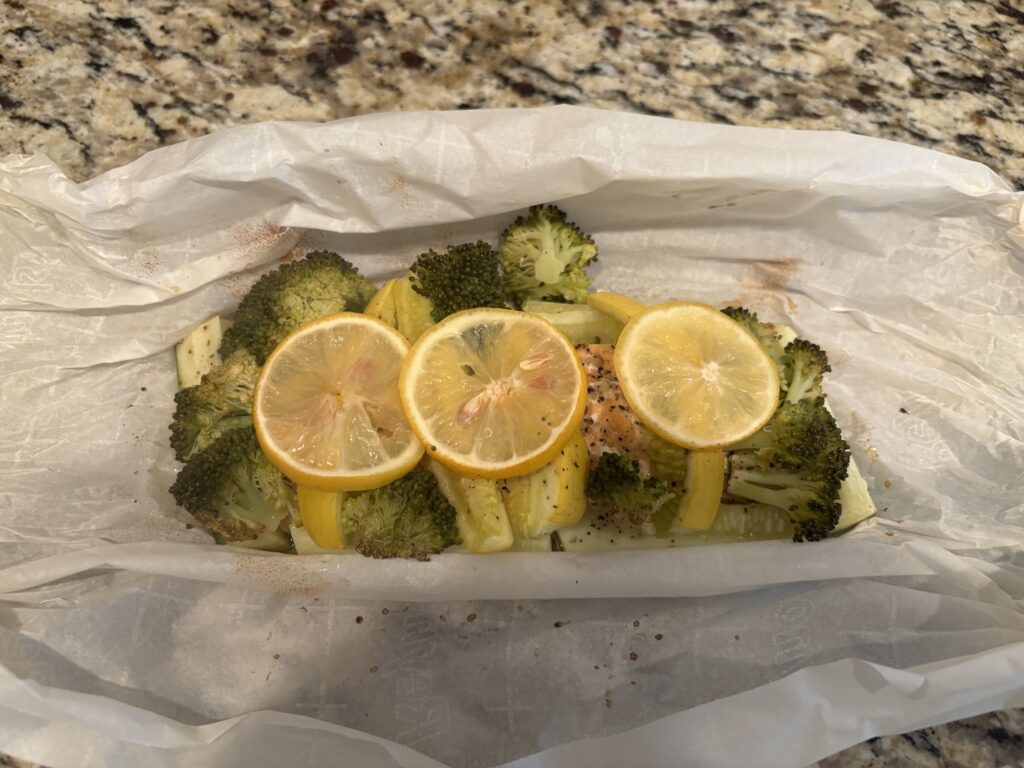
I discarded the lemon slices and transferred the perfectly steamed veggies to a plate. The salmon filet I placed on a bed of seasoned rice I had left over from another meal.
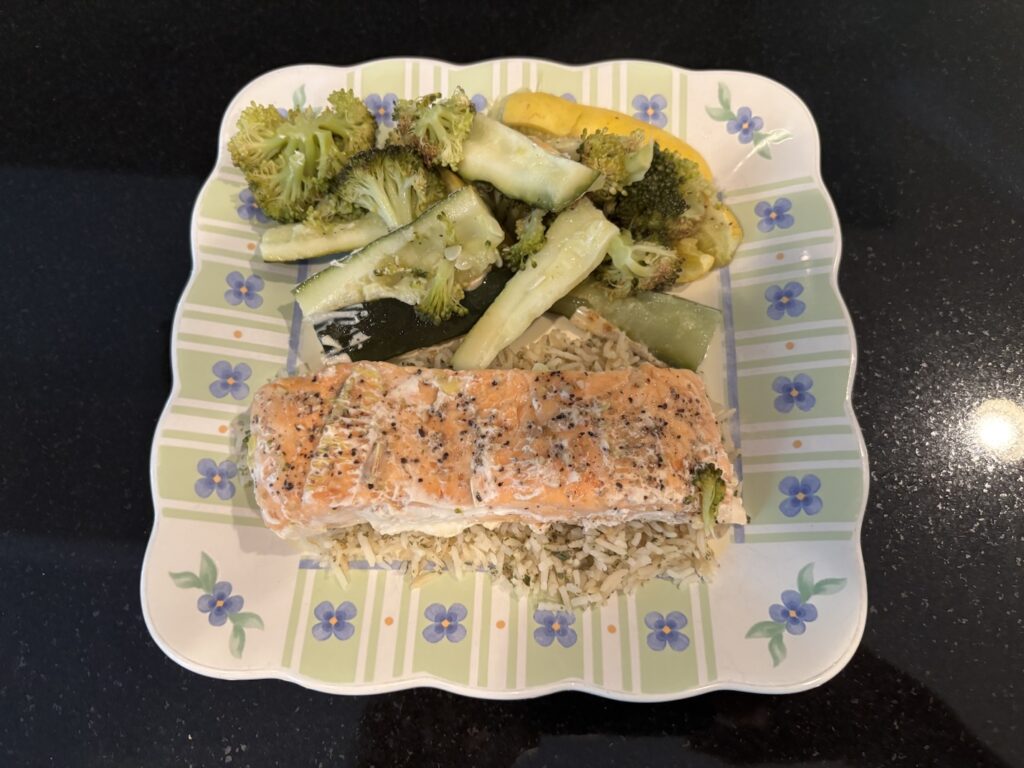
That’s it! I set out your choice of tartar sauce or a mustard remoulade for the salmon (although it is quite good as is), and a side spinach salad with walnuts, feta cheese, apple, and dried cranberries with a light balsamic vinegar and olive oil dressing.
The salmon was flaky and delicious, the veggies wonderful with just a slight hint of the lemon. Clean-up meant just wadding up the parchment papers and tossing them, and running a damp rag over the baking sheet.
I encourage you to try en papillote yourself. There are so many variations on this basic theme, and it is such an easy, healthy, and fun way to prepare a delicious meal.
Happy Cooking!


Leave a Reply